- Home
- App Development
- Blog Details
- 12 mins read
Top 10 Healthcare Apps in USA (2026): Best Apps for Patients
- Published on:
- Written by:
- Share:
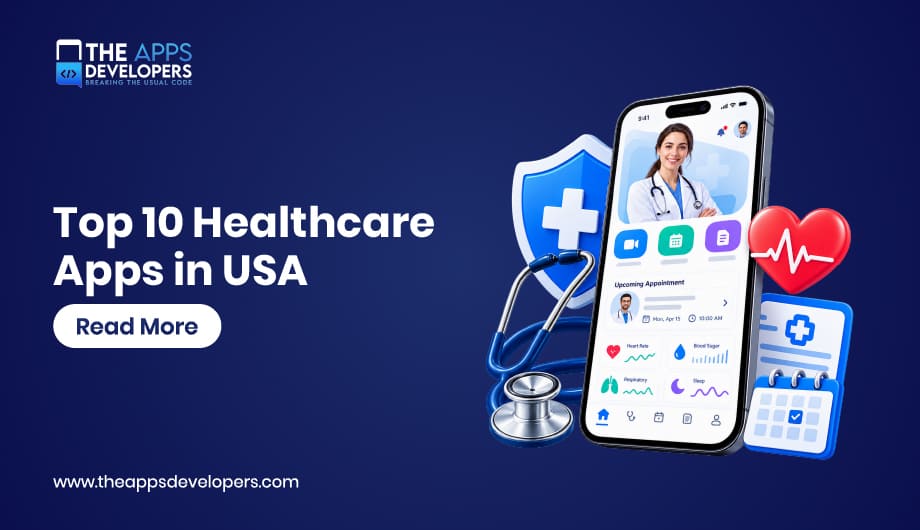
The top healthcare apps in the USA in 2026 are MyChart, Teladoc Health, Zocdoc, GoodRx, Amwell, CVS Health, Talkspace, Headspace, Medisafe, and Apple Health. MyChart is the most widely used app for medical records, Teladoc leads virtual care, and GoodRx is the go-to app for cheaper prescriptions.
Think about the last time you needed a doctor. Maybe you waited on hold to book an appointment, drove across town for a five-minute visit, or paid full price for a prescription because you didn’t know a coupon existed. Healthcare apps were built to fix exactly those moments.
Today, you can check lab results from your couch, see a doctor by video at midnight, and compare drug prices before you reach the pharmacy. Below, we rank the ten best healthcare apps in the USA, explain what each one does best, and cover the privacy questions most people never ask. If you run a clinic, a health startup, or a pharmacy, we’ll also share what goes into Healthcare App Development for a new product.
What Is a Healthcare App?
A healthcare app is a mobile app that helps people manage their health, such as booking appointments, seeing doctors virtually, accessing medical records, saving on prescriptions, or supporting mental health.
Healthcare apps generally fall into a few groups: patient portals, telehealth apps, appointment booking apps, pharmacy and prescription apps, mental health apps, and medication or health tracking apps. Most people end up using two or three together.
Best Healthcare Apps in the USA at a Glance
| App | Category | Best For | Cost to Use |
| MyChart | Patient portal | Medical records and messaging your doctor | Free through your provider |
| Teladoc Health | Telehealth | 24/7 virtual doctor visits | Varies by insurance or employer |
| Zocdoc | Appointment booking | Finding and booking doctors fast | Free for patients |
| GoodRx | Prescription savings | Lower drug prices | Free, with optional paid plan |
| Amwell | Telehealth | Virtual care through insurers and health systems | Varies by plan |
| CVS Health | Pharmacy | Refills, vaccines, and MinuteClinic | Free app |
| Talkspace | Mental health | Online therapy and psychiatry | Insurance or self-pay |
| Headspace | Mental wellness | Meditation, sleep, and stress | Subscription |
| Medisafe | Medication management | Pill reminders and drug interactions | Free, with premium option |
| Apple Health | Health tracking | Health data and records on iPhone | Free on iPhone |
Top 10 Healthcare Apps in the USA
We ranked these apps on how many people rely on them, how well they solve a real patient problem, ease of use, and privacy practices.
1. MyChart: Best for Medical Records
MyChart, built by Epic, is the patient portal used by many of the largest health systems in the country. You can view test results, message your care team, book visits, pay bills, and join video appointments in one place. According to Grand View Research, 49% of US mHealth app users access MyChart, making it the most widely used healthcare app in the country.
2. Teladoc Health: Best for 24/7 Virtual Care
Teladoc Health connects you with licensed doctors by phone or video for common, non-urgent issues like colds, rashes, and sinus infections. It also offers mental health, dermatology, and chronic condition programs. Many people get access through their employer or health plan, which can make visits very affordable.
3. Zocdoc: Best for Booking Doctor Appointments
Zocdoc works like an online booking site for healthcare. You search by specialty, location, and insurance, read verified patient reviews, and book an open slot in a few taps. It’s free for patients and saves the endless phone calls of finding a doctor who’s accepting new patients.
4. GoodRx: Best for Prescription Savings
GoodRx compares prescription prices at nearby pharmacies and gives you free coupons that can cut costs, sometimes below your insurance copay. You just show the coupon on your phone at checkout. If you pay for any medication regularly, it’s worth checking before every refill.
5. Amwell: Best for Virtual Care Through Insurers
Amwell offers urgent care, therapy, and specialist visits by video, and it powers telehealth for many insurers and hospital systems. If your health plan or local hospital offers virtual visits, there’s a good chance Amwell is running them behind the scenes.
6. CVS Health: Best All-in-One Pharmacy App
The CVS Health app handles prescription refills, pickup alerts, vaccine scheduling, and MinuteClinic visits. It’s a practical everyday app for millions of Americans who already use CVS pharmacies.
7. Talkspace: Best for Online Therapy
Talkspace connects you with licensed therapists and psychiatric providers through messaging and video sessions. It works with many insurance plans and employers, which makes ongoing mental health care easier to afford and fit into a busy schedule.
8. Headspace: Best for Mental Wellness
Headspace offers guided meditation, sleep stories, breathing exercises, and stress management programs. It isn’t a replacement for therapy, but it’s one of the easiest ways to build healthier daily mental habits.
9. Medisafe: Best for Medication Reminders
Medisafe reminds you when to take each medication, tracks refills, and warns about possible drug interactions. It’s especially helpful for people managing several prescriptions or caring for an aging parent.
10. Apple Health: Best for Personal Health Data
Apple Health collects steps, sleep, heart rate, and other data from your iPhone, Apple Watch, and connected apps. Its Health Records feature can also pull lab results and medications from participating providers. It’s only available on iPhone, so Android users typically rely on their device maker’s health app instead.
Teladoc vs Amwell: Which Telehealth App Is Better?
Teladoc is better for fast, on-demand care with a wide range of services, while Amwell is better if your insurer or hospital already offers it as your virtual care option.
| Factor | Teladoc Health | Amwell |
| Best for | Fast, everyday virtual care | Care through your health plan or hospital |
| Services | General care, mental health, dermatology, chronic care | Urgent care, therapy, specialist visits |
| Access | App, web, and phone | App and web |
| How most people pay | Employer or insurance benefit | Insurance or health system |
Check your insurance card or benefits portal first. Your plan may already cover one of these apps at little or no cost.
How to Choose the Right Healthcare App
The best healthcare app depends on the problem you’re trying to solve.
If You Want Your Medical Records
Start with MyChart if your doctor or hospital uses Epic, or connect your providers to Apple Health on iPhone.
If You Need a Doctor Quickly
Use Teladoc or Amwell for non-emergency virtual visits, and Zocdoc to book an in-person appointment fast.
If You Want to Save on Prescriptions
Check GoodRx before every refill, and use the CVS Health app to manage pickups and reminders.
If You Need Mental Health Support
Choose Talkspace for therapy with a licensed professional, and Headspace for daily stress and sleep support.
For emergencies, always call 911 or go to the nearest emergency room. Healthcare apps are for non-urgent care.
Are Healthcare Apps HIPAA Compliant?
Not always. HIPAA applies to healthcare providers, health plans, and the companies that work on their behalf, so apps like MyChart are covered, but many consumer wellness apps are not.
That surprises a lot of people. If you download a health app on your own and it isn’t provided by your doctor or insurer, HIPAA may not protect the data you share with it. The HHS guidance on health apps and HIPAA explains when the law applies. Before you share sensitive information, read the app’s privacy policy, check what it shares with advertisers, and turn off any data sharing you don’t need.
Building a Healthcare App: What Businesses Should Know
Every app on this list solves one clear problem extremely well. MyChart owns records, GoodRx owns drug prices, and Zocdoc owns booking. New healthcare apps win the same way: by picking one patient or provider pain point and solving it better than anyone else.
Core Features of a Healthcare App
Most healthcare apps need secure sign-in, patient profiles, appointment scheduling, video visits, secure messaging, prescription management, notifications, and payments. Many patients are older or unwell when they use these apps, so clear, accessible UI/UX design matters more here than in almost any other industry.
EHR Integration and Data Exchange
Healthcare apps rarely work alone. They need to pull data from electronic health records, labs, pharmacies, and insurers, usually through standards like HL7 FHIR. Reliable API and backend development is what keeps that data accurate and moving safely between systems.
Security, HIPAA, and Regulation
If your app handles protected health information for a provider or health plan, it must meet HIPAA requirements, including encryption, access controls, audit logs, and signed business associate agreements. Secure hosting through experienced DevOps and cloud solutions helps you meet those standards from day one.
Strong account security matters too, since patients often sign in on shared or family devices. Our guide to web app session management covers safe sign-in, timeouts, and logout.
Some apps go further and diagnose or treat conditions. Those may be regulated as medical devices, so review the FDA’s policy on device software functions and mobile medical apps early in planning.
Pharmacy and Subscription Models
Pharmacy delivery and medication apps are one of the fastest-growing areas in digital health. Our guide on how to develop an app like Life Pharmacy walks through the features, compliance, and costs involved.
Wellness apps like Headspace earn through subscriptions. Our breakdown of how to build a subscription-based app covers pricing tiers, trials, and in-app billing.
How Much Does It Cost to Build a Healthcare App?
These are typical ranges based on scope. Healthcare apps usually cost more than other apps because of compliance, security, and integration work.
| Version | What’s Included | Estimated Cost | Timeline |
| MVP | Patient profiles, booking, secure messaging, notifications | $40,000 to $80,000 | 4 to 6 months |
| Mid-level | MVP plus video visits, payments, e-prescriptions, admin panel | $80,000 to $150,000 | 6 to 9 months |
| Full platform | EHR integration, remote monitoring, analytics, web portal, AI features | $150,000 to $300,000+ | 9 to 12+ months |
Conclusion
The best healthcare apps in the USA each solve one problem really well. MyChart keeps your records in one place, Teladoc and Amwell bring the doctor to you, Zocdoc makes booking easy, and GoodRx helps you pay less at the pharmacy. Pick the apps that match your needs, check what your insurance already covers, and read the privacy settings before you share sensitive data.
Planning to build a healthcare app of your own? Book a free consultation with The Apps Developers, and we’ll help you scope a secure, compliant product your patients will actually use.
Frequently Asked Questions
What is the most popular healthcare app in the USA?
MyChart is the most popular healthcare app in the USA. Grand View Research reports that 49% of US mHealth app users access it for medical records and messaging their providers.
What is the best telehealth app in the USA?
Teladoc Health is one of the best telehealth apps for fast, 24/7 virtual care. Amwell is a strong alternative, especially if your insurer or hospital already offers it.
Are healthcare apps safe to use?
Most well-known healthcare apps use strong security, but privacy protections vary. Apps from your doctor or health plan are covered by HIPAA, while many consumer wellness apps are not.
Are all health apps covered by HIPAA?
No. HIPAA covers apps offered by healthcare providers, health plans, and their business associates. Many apps you download on your own are not covered, so always check the privacy policy.
What is the best app for saving money on prescriptions?
GoodRx is the best app for saving on prescriptions. It compares prices at nearby pharmacies and offers free coupons that can sometimes beat your insurance copay.
How much does it cost to build a healthcare app?
Building a healthcare app typically costs $40,000 to $80,000 for an MVP. A full platform with EHR integration, video visits, and remote monitoring can cost $150,000 to $300,000 or more.
Table of Contents

Taha Mirza
Taha Hissam Mirza is a technology writer at The Apps Developers, covering mobile app development, web development, software engineering, and emerging technologies. He explores industry trends, development strategies, and practical solutions that help businesses make informed technology decisions. Through research-driven insights and easy-to-understand articles, Taha simplifies complex technical concepts and helps startups, entrepreneurs, and enterprises understand how to build scalable, secure, and user-friendly digital products.