Web Application Development
Mobile App Development
UI/UX Design
API & Backend Development
DevOps and Cloud Solutions
Web Application Development
Mobile App Development
UI/UX Design
API & Backend Development
DevOps and Cloud Solutions
Web Application Development
Mobile App Development
UI/UX Design
API & Backend Development
DevOps and Cloud Solutions
Web Application Development
Mobile App Development
UI/UX Design
API & Backend Development
DevOps and Cloud Solutions
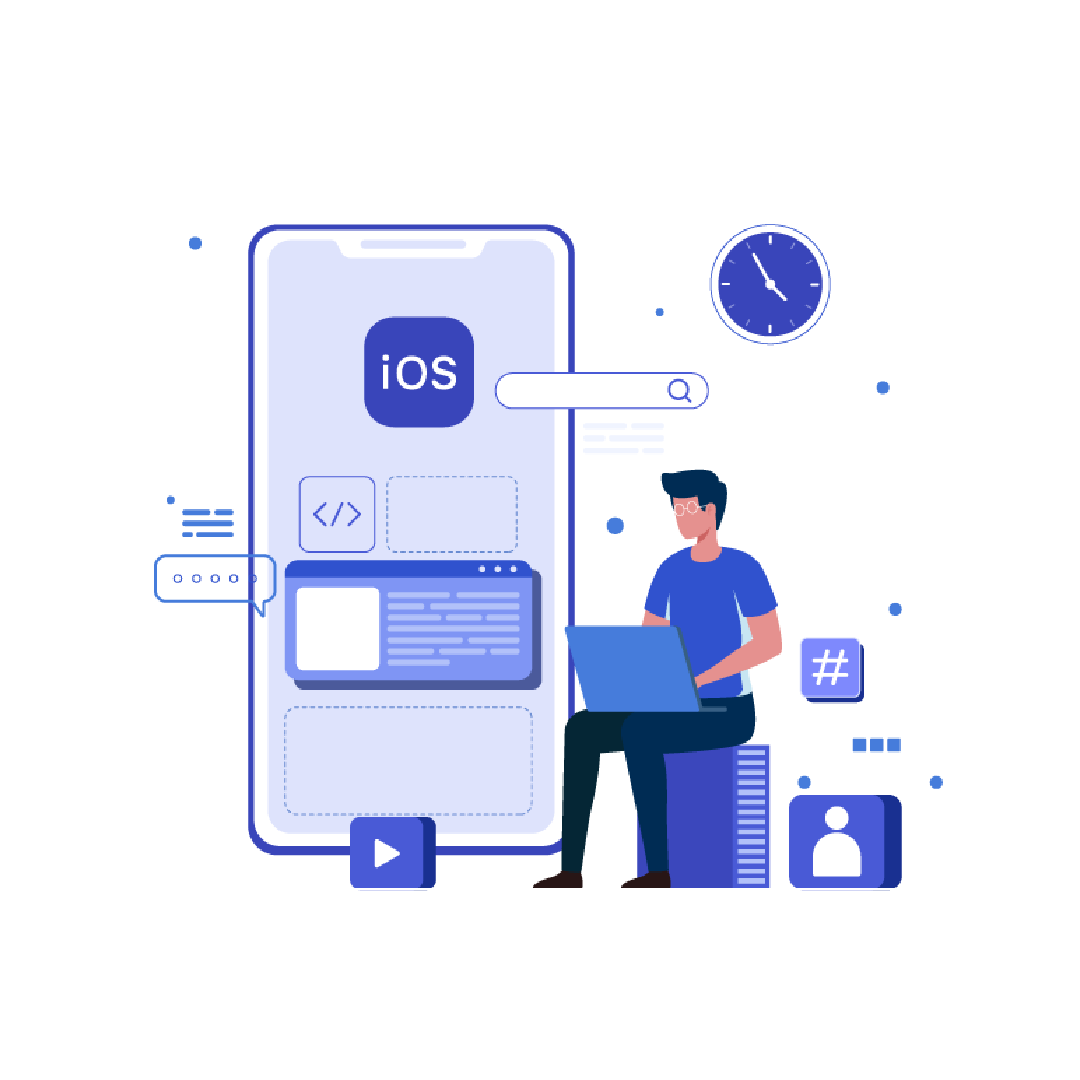
IOS App Development

iOS Apps Engineered to Pass App Store Review the First Time, Not the Third

Custom iOS app development services in the USA, built by a team that treats Apple's Human Interface Guidelines and App Store review requirements as design constraints from day one, not a rejection notice to react to after submission.

120+ Devices tested
iOS app development
Fixed Scope pricing
Verified By — Trusted Industry Platforms.

Awards & Recognization

Live Journal
Good Firms
sortlist
Tech Reviewer
Live Journal
Good Firms
sortlist
Tech Reviewer
WHY CHOOSE US

What Makes iOS App Development Different

iOS app development isn't really about the interface. It's about whatever Apple actually enforces, Human Interface Guidelines, App Store review policies, privacy requirements like App Tracking Transparency, all while staying fast enough to ship on a real timeline. Get the compliance and review strategy wrong and the app becomes a resubmission cycle, not a launch.

Most iOS app development services fail the same way: an app that looks polished in a demo but gets rejected on first submission because a permission request wasn't scoped correctly, or a design that technically works but ignores an HIG requirement Apple's reviewers actually check for.

Our Process

Our iOS App Development Process

01

Discovery & NDA

We sign an NDA before any technical discussion begins, then map your product requirements, target devices, and compliance needs into a clear development scope, not a vague "let's build an app" starting point.

02

UX Research & Wireframes

We research how your actual users will move through the app, then build wireframes around those real workflows, not a generic template flow with your logo dropped in.

03

SwiftUI Design

High-fidelity SwiftUI screens built to Apple's Human Interface Guidelines from the start, so design review doesn't quietly turn into a redesign after an App Store rejection.

04

Agile Swift Development

Development happens in two-week sprints with working builds you can actually test on a real device, not a single reveal at the end of three months of silence.

05

QA & App Store Review Prep

We test across real iPhone models and current iOS versions, then check the build against Apple's current review guidelines before it ever reaches App Store submission.

06

Launch, ASO & Warranty

We handle submission, respond to any reviewer questions directly, optimize your App Store listing, and stay on for a defined warranty period after launch, not a handoff the day it goes live.

Discuss Your Project
iOS Technology Stack

The Technologies Behind Our iOS Apps

From Swift and SwiftUI to Apple frameworks, native device integrations, backend APIs, cloud infrastructure, databases, automated testing, security, analytics, payments, and App Store delivery.

01
Foundation

Core iOS Development

10 technologies
Swift
SwiftUI
UIKit
iOS SDK
Xcode
CC Combine
AC Async / Await
SPM Swift Package Manager
CP CocoaPods

Objective-C
02
Interface Layer

UI, Architecture & Experience

10 technologies
SUSwiftUI
UIUIKit
MVMVVM
MVCMVC
VIPVIPER
ALAuto Layout
CACore Animation
SFSF Symbols
HIGApple HIG
ACCAccessibility
03
Apple Ecosystem

Native Frameworks & Device APIs

12 technologies
HKHealthKit
ARARKit
MLCore ML
MKMapKit
CLCore Location
AVAVFoundation
BTCore Bluetooth
NFCCore NFC
CPCarPlay
WKWatchKit
CKCloudKit
SKStoreKit
04
Connectivity

Backend & APIs

11 technologies
Node.js
Python
Java
RESTREST APIs
GraphQL
APApollo
WSWebSockets
gRPCgRPC
JWTJWT
URLURLSession
PFPush APIs
05
Infrastructure

Cloud, CI/CD & App Store Delivery

12 technologies
Firebase
AWS
Google Cloud
Azure
XCXcode Cloud
TFTestFlight
ASCApp Store Connect
GitHub Actions

GitLab CI
FLFastlane
BRBitrise
Docker
06
Data Layer

Databases & Storage

11 technologies
CDCore Data
SDSwiftData
SQLite
RLRealm
CKCloudKit
Firestore
PostgreSQL
MySQL
MongoDB
Redis
KCKeychain Storage
07
Quality

Testing, QA & Monitoring

11 technologies
XTXCTest
XCUXCUITest
TFTestFlight
INSInstruments
MKMetricKit
BSBrowserStack
Crashlytics
SESentry
UTUnit Testing
UIUI Testing
PTPerformance Testing
08
Product Services

Security, Payments & Analytics

12 technologies
KCKeychain
FAFace ID
TATouch ID
CKCryptoKit
OAOAuth 2.0
OIOpenID Connect
Apple Pay
Stripe
RCRevenueCat
Firebase Analytics
MXMixpanel
AMAmplitude
iOS App Development Timeline

How Long Does Custom iOS App Development Take?

As one of the most trusted iOS app development companies in the USA, we prioritize on-time delivery for our clients. We deliver most iOS apps end-to-end in 10 to 18 weeks: 1 week of discovery, 2–3 weeks of SwiftUI design, 6–10 weeks of Swift development, plus 2 weeks of device QA and App Store submission. Basic MVPs are delivered in 6–10 weeks, whereas enterprise and regulated iOS apps take 5–10 months. iOS typically takes 10–20% less time than Android, since Apple's narrower device and OS matrix means less fragmentation testing to cover.

8–10 Weeks

MVP Track

A simple MVP of a single-feature Swift app with SwiftUI. We test it on current and previous-generation iPhone models. This version is ideal for pre-PMF founders and seed-stage startups. We release a test build on TestFlight within a 6-week timeframe.

10–18 Weeks

Standard iOS App

Standard time where most US iOS apps ship. This app has full custom SwiftUI design, a scalable backend, multi-device QA across current iOS versions, App Analytics, and App Store ASO.

5–10 Months

Enterprise / Regulated

Enterprise-grade iOS app developed using native Swift with multi-surface support across iPhone, iPad, Apple Watch, and Apple TV. HIPAA, PCI-DSS, and SOC 2 compliance, SSO, enterprise integrations, full device QA across current and legacy iOS versions, and penetration testing are included.

Decision Guide

Should Your App Be Native Swift or Cross-Platform?

This is the decision most founders get talked out of thinking about, because whichever agency you ask usually just recommends whatever they're better staffed to build. It's also not a permanent choice, teams migrate in both directions later, but starting on the wrong side of it costs real time and money to unwind. Here's the honest breakdown, including the cases where the "recommended" option isn't actually the right call.

Best for faster dual-platform delivery

Cross-Platform (Flutter / React Native)

Best when speed to market across both platforms outweighs squeezing out every bit of platform-specific polish. A single codebase means feature parity between iOS and Android by default, not two teams building the same thing twice and drifting apart.

Choose Cross-Platform When

  • Budget or timeline requires one codebase covering both iOS and Android
  • The app is UI-heavy but not deeply integration-heavy, such as content, forms, or standard navigation patterns
  • You're validating a product and need to learn fast across both platforms at once, rather than perfecting one platform first

Not Ideal If

  • You need deep iOS-specific hardware or API access that the cross-platform framework doesn't fully expose
  • Long-term performance at real scale is a hard requirement, since cross-platform adds a translation layer that native doesn't have
  • Your product's differentiation depends heavily on a platform-native feel

The Honest Tradeoff

You move faster and cheaper at the start. The cost can show up later in animation polish that never quite matches native, waiting on the framework to support a new iOS feature, or performance ceilings that become a real problem once you have real scale.

Get Our Recommendation
Who We Work With

Industry Expertise Our iOS Development Experts Bring

A great Swift developer solves half the problem. Domain knowledge solves the other half. Here's where our iOS team has built repeatedly, not once.

Healthcare

Developers who understand HealthKit integration, PHI handling, and the App Store's extra scrutiny on health-data apps, so you're not paying someone to learn the compliance basics on your project.

Explore

Retail

Engineers who've shipped Apple Pay checkout flows, inventory-synced storefronts, and loyalty features before, not developers figuring out payment edge cases for the first time on your app.

Explore

Logistics

iOS developers experienced with GPS-accurate tracking, offline-capable field apps, and real-time dispatch integration, built for drivers and warehouse staff, not just office wifi.

Explore

Fintech

Developers who build to the security and compliance bar financial data actually requires, from biometric auth to encrypted local storage, not a generic login screen with a bank logo on it.

Explore

Automotive

Experience with Apple CarPlay integration, connected-vehicle apps, and the real-time telematics data that separates a functional automotive app from a demo.

Explore

E-Commerce

Developers who've built full checkout flows, product catalogs, and Apple Pay integration under real transaction volume, not just a shopping cart that works in a walkthrough.

Explore

Education

iOS developers experienced with offline course downloads, cross-device progress sync, and the accessibility requirements education apps actually need to meet.

Explore

Sports

Experience building for real-time score feeds, live streaming, and push notifications timed to actual game events, not a static stats screen that updates whenever someone refreshes it.

Explore
IOS DEVELOPMENT CAPABILITIES

Built for the App Store You Actually Ship To

One Codebase. Every Platform.

We Test on Real Hardware. Not Simulators.

We review every build against Apple's current Human Interface Guidelines and App Store review policies before submission, not after a rejection notice. Fragmentation isn't Apple's problem, review compliance is, and it's the thing most agencies quietly underinvest in

iPhone
iPad
Apple TV
Watch
Mac
Vision Pro

Built for App Store Compliance

Every build reviewed against HIPAA, PCI-DSS, and SOC 2 where required, before submission, not after a rejection.

NDA Before Discovery

Signed before any technical discussion begins, so your product idea stays protected from the first call.

Senior Swift Engineers Only

No junior rotation on your project. Every build is written and reviewed by developers who've shipped production Swift apps before.

Fixed-Scope, Fixed-Price

The number we quote is the number you pay, no line items that show up after development starts.

Explore Our IOS Capabilities
Privacy, Security & App Store Compliance

The Reason Apps Get Rejected? It's Almost Always Privacy.

App Store rejection rates have climbed in recent years, and privacy compliance, not broken features, is a big part of why. Miss a required Privacy Manifest entry, skip the App Tracking Transparency disclosure, or misjudge a Human Interface Guidelines detail, and the review clock resets. We check for all of it before submission, not after a rejection notice tells us what we missed.

Every iOS app we ship comes with a complete Privacy Manifest declaring data types, required-reason API usage, and third-party SDK access, mandatory for every new submission and update since May 1, 2024; an ATT prompt with the explicit data-recipient disclosure Apple's privacy rules require; and a regulatory profile matched to your actual industry, HIPAA, PCI-DSS, SOC 2, GDPR, or CCPA, scoped to what your app actually touches, not a generic checklist applied to every build.

Privacy Manifest

Declared data types, API usage reasons, and third-party SDK disclosure. Mandatory for all submissions since May 1, 2024.

App Tracking Transparency

Permission prompts with named third-party data recipients, matched to Apple's current ATT disclosure requirements.

HIPAA & PHI

BAA-ready architecture, end-to-end encryption, and audit logging for apps that touch protected health information.

PCI-DSS

Tokenization, Apple Pay integration with no raw card data held at rest, built toward PCI-DSS Level 1 practices.

SOC 2 / ISO 27001

Access controls, audit logs, and least-privilege permissions by default, not bolted on after a client asks.

GDPR & CCPA

Data export, deletion, and consent management built in, with regional data residency handled correctly.

The Difference

Us vs. a Typical iOS Agency

FactorThe Apps DevelopersTypical Agency
Device testing✓ Real hardware lab× Emulators only
Engineering team✓ Senior-only, no rotation× Mixed junior/senior pods
Pricing✓ Fixed scope, fixed price× Time-and-materials creep
Code ownership✓ 100% yours at handoff× Often ambiguous
Post-launch support✓ Defined warranty + SLA× Best-effort, if at all
Selected Work

Custom Apps We've Shipped

Explore digital products designed to improve operations, customer experiences, and business performance across multiple industries.

Client Stories

Our Clients Simply Love What We Do

Proud to support ambitious teams with reliable product development, clear communication, and long-term technical expertise.

★★★★★ Google Reviews
★★★★★ Clutch Reviews

“We needed an App Store resubmission fixed fast after a Privacy Manifest rejection. They found the actual issue in a day, not the two weeks our last vendor quoted us.”

Healthcare Startup Founder
Founder Healthcare Startup ★★★★★
Healthcare

“HealthKit integration was the one piece our last developer couldn't get right. This team had it working correctly by the second sprint, tested against real device data, not just the simulator.”

Fitness App Company CTO
CTO Fitness App Company ★★★★★
Fitness

“Apple Pay implementation went in without a single payment-related rejection. That alone saved us weeks compared to our first submission attempt with a different agency.”

Retail App Company Product Lead
Product Lead Retail App Company ★★★★★
Retail

“What stood out was the communication. We got a working build every two weeks, not a single reveal after three months of silence.”

Fintech Startup Founder
Founder Fintech Startup ★★★★★
Fintech

“They caught a SOC 2 gap in our data handling before it became a client-facing problem. That's the kind of thing you want caught in development, not in an audit.”

Enterprise SaaS Company VP Engineering
VP Engineering Enterprise SaaS Company ★★★★★
SaaS

“Post-launch support actually meant something. When iOS 18 broke a feature in our app, they had a fix shipped within days, not buried in a ticket queue.”

Consumer App Company Founder
Founder Consumer App Company ★★★★★
Consumer App
01 How much does iOS app development cost in the USA?

Cost depends mainly on how many systems the app integrates with and how much custom design work is involved. A basic single-feature app costs far less than a platform with backend integration, payment processing, and multi-device support. US-based iOS development typically runs higher than offshore rates, but includes tighter communication and fewer handoff delays. Get a scoped estimate based on your actual requirements rather than a flat per-screen number, since that's rarely how real project costs break down.

02 How long does it take to build an iOS app?

Most focused iOS apps take 10 to 18 weeks from discovery to App Store launch, with basic MVPs shipping in 6 to 10 weeks and enterprise or regulated builds taking 5 to 10 months. The biggest variable isn't the code, it's how many third-party integrations, compliance requirements, and device or OS versions the app needs to support at launch.

03 Why does an iOS app get rejected by Apple, and how do you avoid it?

Most rejections come down to privacy compliance, not broken features, missing Privacy Manifest entries, an incomplete App Tracking Transparency disclosure, or a Human Interface Guidelines violation a reviewer actually checks for. We review every build against Apple's current guidelines before submission, not after a rejection notice tells us what we missed.

04 Should I build my app in native Swift or a cross-platform framework?

Native Swift is the better choice when deep Apple ecosystem integration, performance, or long-term maintainability matter most, while cross-platform frameworks like Flutter or React Native make sense when you need one codebase covering both iOS and Android on a tighter budget. The right answer depends on whether your app's value comes from doing something iOS-specific exceptionally well or from reaching both platforms fast with one team.

05 Do you build both the iOS app and its backend?

Yes, when needed. iOS apps live or die on backend reliability, authentication, data sync, and API performance, so we design the backend and the app together rather than treating them as two separate projects handed off between teams.

06 Can a USA-based iOS development company work with a startup, or only enterprise clients?

Both. Engagements scale from a single MVP build for a pre-funding startup to full enterprise iOS development with HIPAA, PCI-DSS, or SOC 2 compliance built in. The process changes based on scope and regulatory need, but the same senior engineering team handles both ends of that range.

07 What happens after my iOS app launches?

Every build includes a defined post-launch support window covering iOS version updates, bug fixes, and App Store policy changes, since compliance requirements shift more often than most teams expect. We don't consider the engagement done the day an app goes live.

READY WHEN YOU ARE

Let's Build an iOS App That Passes Review the First Time

Whether it's a single-feature MVP, a full enterprise platform, or fixing a compliance gap in something already live, let's start with an honest look at your current requirements. Button: Start Your iOS App →

Start Your iOS App
The Apps Developers
Let’s Build Something Great

Still Thinking It Over?

Submit your details and our team will reach out to discuss how we can bring your app or software idea to life.

Web Development Mobile Apps Custom Software