- Home
- App Development
- Blog Details
- 12 mins read
When to Choose Native App Development
- Published on:
- Written by:
- Share:
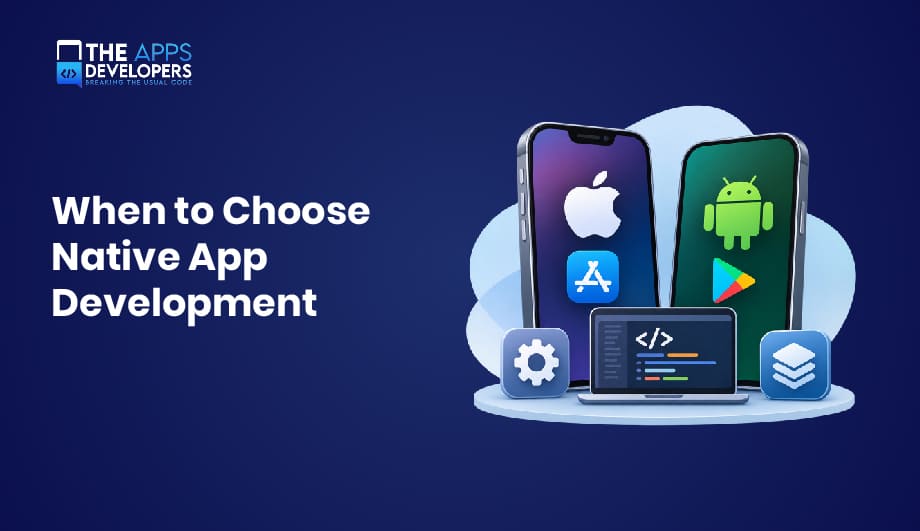
You should choose native app development when your app needs top-tier performance, deep access to device hardware, strong security, a platform-specific user experience, complex graphics, or long-term optimization on iOS and Android. In these cases, building separately in Swift for iOS and Kotlin for Android delivers results that shared-code frameworks struggle to match.
Picking the right development approach shapes your budget, launch speed, and how users feel about your product for years. This guide walks through the six scenarios where native mobile app development is the smarter investment, when it isn’t, and the factors to weigh before you commit.
What Is Native App Development?
Native app development means building a mobile app specifically for one operating system, using that platform’s official languages, SDKs, and tools. An iOS native app is built for iPhone and iPad, while an Android native app is built for the Android ecosystem. Each version is compiled to run directly on the device, with no translation layer between your code and the operating system.
The core technologies include:
- iOS: Swift as the primary language, SwiftUI for modern interfaces, and Xcode as the development environment.
- Android: Kotlin as the preferred language, Jetpack Compose for declarative UI, and Android Studio as the IDE.
Because each app speaks the platform’s own language, it gets immediate, unrestricted access to everything the operating system offers.
When Should You Choose Native App Development?
Native development earns its higher investment in six specific situations. If your app matches one or more of them, native is usually the right call.
When High Performance Is a Priority
Native app performance is the strongest argument for going native. Code compiled for a specific platform runs faster, launches quicker, and uses memory and battery more efficiently. Apps that process large data sets, run real-time features like live trading or video calls, or must stay smooth on older devices benefit most. When even a short lag can cost you users or revenue, native code removes the bottleneck.
When Your App Requires Advanced Device Features
If your app depends on hardware such as the camera, GPS, Bluetooth, NFC, biometrics, sensors, or health data, native development gives you direct and complete access. Cross-platform frameworks rely on plugins to reach these features, and plugins often lag behind, lack advanced options, or break after OS updates. Fitness trackers, navigation tools, and smart-home controllers all depend on reliable hardware integration.
When Security and Data Protection Are Critical
Apps handling payments, medical records, or personal data need the strongest protection available. Native apps can use built-in platform security directly, including the iOS Keychain, Android Keystore, Secure Enclave, hardware-backed encryption, and biometric authentication. Fewer third-party dependencies also mean a smaller attack surface and easier compliance with standards like HIPAA, PCI DSS, and GDPR.
When You Need a Platform-Specific User Experience
iPhone and Android users expect different navigation patterns, gestures, and visual conventions. Native development follows Apple’s Human Interface Guidelines and Google’s Material Design by default, so your app feels familiar from the first tap. For consumer brands where polish drives ratings, retention, and reviews, that platform-true feel is a real competitive edge.
When Your App Relies on Complex Graphics or Animations
Games, 3D product viewers, video editors, and apps with rich motion design need direct access to the GPU. Native frameworks such as Metal on iOS and Vulkan or OpenGL ES on Android deliver high frame rates and fluid animations. Cross-platform tools can handle simple transitions, but heavy rendering workloads quickly expose their limits.
When Long-Term Platform Optimization Matters
If your app is a core product you plan to grow for years, native gives you the most control over its future. You can adopt new iOS and Android features on release day, fine-tune each platform independently, and avoid waiting on framework maintainers to catch up. This makes native a strong fit for flagship products, enterprise tools, and apps where the mobile experience is the business.
Benefits of Native App Development
The benefits of native app development come down to four advantages:
- Performance and responsiveness: Faster load times, smoother scrolling, and lower battery drain.
- Access to platform-specific APIs: Full use of hardware and system services without plugin workarounds.
- Consistent platform experience: Interfaces that match what iOS and Android users already know.
- Early access to new OS features: Support for new capabilities, such as widgets or AI APIs, as soon as Apple and Google release them.
When Native App Development May Not Be the Best Choice
Native isn’t the right fit for every project. Consider another approach in these cases:
- Limited development budget: Two separate codebases usually mean two development tracks, which raises upfront costs. Our mobile app development cost guide breaks down what to expect.
- Tight launch timelines: If you need to reach both iOS and Android quickly, a shared codebase can get you to market faster.
- Simple applications targeting both platforms: Content apps, booking tools, internal dashboards, and MVPs rarely need native-level power, so cross-platform often delivers the same user value for less.
Native vs. Cross-Platform Development: Which Should You Choose?
Choose native when performance, hardware access, and platform polish matter most; choose cross-platform when budget and speed to market come first. Here’s a quick snapshot:
| Factor | Native Development | Cross-Platform Development |
| Performance | Highest; compiled for each platform | Good for most apps; can lag on heavy workloads |
| Development cost | Higher; two codebases | Lower; one shared codebase |
| Time to market | Longer | Faster |
| Device integration | Full, immediate access | Plugin-dependent; may be delayed |
| Maintenance | Two codebases to update | One codebase, plus framework updates |
For a deeper breakdown of costs and trade-offs, read our full guide on native vs. cross-platform development.
Real-World Use Cases for Native App Development
These app categories consistently get the most value from going native:
- Mobile gaming and graphics-intensive apps: High frame rates, low input latency, and direct GPU access are essential for games, 3D design tools, and video editing apps.
- Banking and financial applications: Mobile banking, trading, and payment apps rely on biometric login, hardware-backed encryption, and fast, reliable transactions.
- AR and camera-intensive applications: Virtual try-ons, scanning apps, and AR experiences need full access to ARKit, ARCore, and advanced camera controls.
- Hardware-connected and IoT applications: Wearables, smart-home controllers, and medical devices need stable Bluetooth and background connectivity that native code handles best.
Key Factors to Consider Before Choosing Native Development
Before you commit, evaluate these four factors honestly:
- Target audience and platforms: Do your users lean toward iOS, Android, or both? Launching native on one platform first can reduce cost while you validate demand.
- App complexity: The more your app depends on hardware, real-time processing, or advanced graphics, the stronger the case for native.
- Budget and timeline: Native requires more upfront investment and time, but it often lowers rework costs later for complex products.
- Long-term maintenance requirements: Plan for two codebases, OS updates, and the team skills needed to support both Swift and Kotlin over time.
Final Thoughts: Is Native App Development Right for Your Business?
Native app development is the right choice when performance, hardware access, security, platform-specific design, complex graphics, or long-term control define your app’s success. If your project is simpler, budget-constrained, or racing a deadline, cross-platform may serve you better.
The best decision starts with a clear look at your users, features, and growth plans. At The Apps Developers, our team builds high-performance native apps for iOS and Android and helps you choose the approach that fits your goals. Explore our mobile app development services to start planning your app with experienced Swift and Kotlin developers.
Table of Contents

Taha Mirza
Taha Hissam Mirza is a technology writer at The Apps Developers, covering mobile app development, web development, software engineering, and emerging technologies. He explores industry trends, development strategies, and practical solutions that help businesses make informed technology decisions. Through research-driven insights and easy-to-understand articles, Taha simplifies complex technical concepts and helps startups, entrepreneurs, and enterprises understand how to build scalable, secure, and user-friendly digital products.