
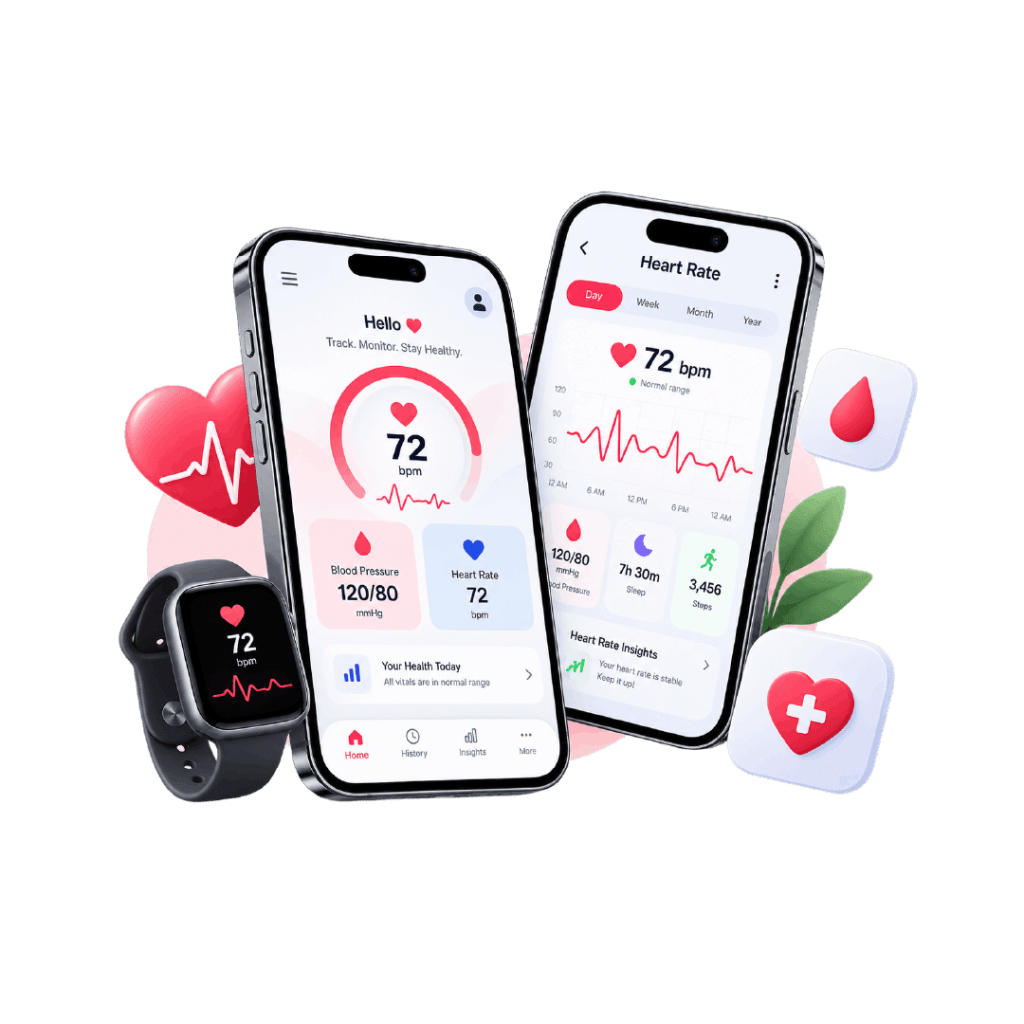
The best blood pressure and heart rate apps in 2026 include SmartBP, OMRON connect, Withings, Samsung Health, Qardio, Heartify, Apple Health, Cardiogram, Blood Pressure Monitor: AI BP, and Blood Pressure Diary. The right app depends on whether you need blood pressure logging, connected-device monitoring, heart rate tracking, trend analysis, or health data sharing.
Blood pressure and heart rate apps can make it easier to organize readings, identify trends, set reminders, and share health information with a healthcare professional.
However, these apps do not all work in the same way. Some connect to validated blood pressure monitors, some primarily store manually entered readings, and others focus on heart rate or wearable data.
The American Heart Association recommends using an automatic, upper-arm cuff-style blood pressure monitor for home measurements and notes that home monitoring does not replace regular medical care.
For businesses planning a digital health product, these apps also provide useful examples of how mobile technology can connect users, health data, connected devices, and healthcare workflows. Companies exploring this space can consider healthcare app development with compliance and data security considered from the beginning.
Quick Comparison of Blood Pressure and Heart Rate Apps
App | Best For | Key Capability |
SmartBP | BP tracking | BP, heart rate, reports |
OMRON connect | Connected BP monitors | Device syncing and trends |
Withings | Connected health ecosystem | BP and broader health data |
Samsung Health | Galaxy users | Heart and wellness tracking |
Qardio | Connected monitoring | Remote health monitoring |
Heartify | Heart rate tracking | Camera-based pulse estimates |
Apple Health | iPhone users | Centralized health data |
Cardiogram | Heart data | Wearable-based heart monitoring |
Blood Pressure Monitor: AI BP | BP logging | BP and pulse tracking |
Blood Pressure Diary | Simple BP records | Logging and trend history |
1. SmartBP
SmartBP is a blood pressure tracking app that lets users record, analyze, and share blood pressure information.
Its current feature set includes blood pressure and heart rate tracking, charts, PDF reports, Apple Health integration, medication reminders, and data export. It can also work with multiple user profiles.
Best for: People who want detailed blood pressure records and reports.
2. OMRON connect
OMRON connect is designed to work with compatible OMRON connected blood pressure monitors and store health readings digitally.
The app can synchronize readings through Bluetooth, display trends, and allow users to share heart health information with family members or healthcare professionals. OMRON also offers free and premium app features.
Best for: Users with compatible OMRON devices.
3. Withings
The Withings app combines blood pressure monitoring with a broader connected health ecosystem.
Withings says its ecosystem can connect blood pressure monitors and other health devices, while the app provides health data, insights, and sharing capabilities.
Best for: Users who want blood pressure tracking alongside broader health monitoring.
4. Samsung Health
Samsung Health is a broader health and fitness platform that includes heart rate and, for supported Galaxy devices and users, blood pressure monitoring features.
Samsung announced that blood pressure monitoring became available to select Galaxy users in the U.S. in 2026 through compatible Galaxy Watch and Samsung Health Monitor functionality.
Best for: Samsung Galaxy and Galaxy Watch users.
5. Qardio
Qardio provides connected health monitoring solutions that can collect cardiovascular measurements through compatible devices and support remote monitoring workflows.
Qardio’s ecosystem has been used for blood pressure, heart rate, weight, and other health measurements, including remote patient monitoring applications.
Best for: Connected health monitoring and remote patient care.
6. Heartify
Heartify is a heart health and wellness app focused primarily on heart rate, pulse, HRV, and related tracking.
Its iPhone app can estimate heart rate using the phone camera, while the service provides history, reports, and wellness information. Heartify explicitly states that its app is not intended for medical use.
Best for: Heart rate and wellness tracking.
7. Apple Health
Apple Health is Apple’s centralized health data platform for organizing information from iPhone, Apple Watch, compatible devices, and third-party apps.
Apple Health can display heart-related information, while Apple Watch can provide heart rate measurements and other cardiovascular features. Apple’s current Health platform also includes hypertension notifications on supported Apple Watch models.
Best for: iPhone and Apple Watch users who want centralized health records.
8. Cardiogram
Cardiogram is a heart health tracking application designed to help users monitor and understand heart-related data from compatible devices.
Its platform allows users to track heart health information and share information with healthcare professionals in supported programs.
Best for: Users interested in wearable-based heart monitoring.
9. Blood Pressure Monitor: AI BP
Blood Pressure Monitor: AI BP is an iPhone health app designed to organize blood pressure and heart rate information.
Its current App Store listing describes manual BP logging, pulse tracking, trend visualization, reports, reminders, and camera-based pulse functionality.
Best for: Users who want BP and pulse tracking in one app.
10. Blood Pressure Diary
Blood Pressure Diary is a tracking app designed to help users record blood pressure, pulse, and contextual information over time.
Its current listing supports logging systolic and diastolic readings, pulse, body position, meal context, notes, and historical records.
Best for: Simple blood pressure record keeping.
What Should You Look for in a Blood Pressure App?
The most useful features depend on your needs, but consider:
- Manual blood pressure logging
- Heart rate tracking
- Compatible monitor integration
- Apple Health or Health Connect support
- Trend charts
- Reminders
- Data export
- PDF reports
- Privacy controls
- Multi-user support
The American Heart Association recommends choosing a validated upper-arm monitor for home blood pressure measurement rather than relying on unsupported devices or methods.
Google’s Health Connect platform can store health information such as blood pressure and heart rate and gives users control over which connected applications can access their data.
Can a Phone App Measure Blood Pressure?
A phone app should not automatically be assumed to provide a medically accurate blood pressure measurement.
Some apps allow users to enter readings from a blood pressure monitor, while others offer camera-based pulse estimates. These are different functions.
The FDA has specifically warned consumers about unauthorized devices and software features that claim to measure or estimate blood pressure because inaccurate measurements can lead to inappropriate or delayed medical decisions.
For blood pressure management, use an appropriate authorized or validated monitor and discuss readings with a healthcare professional.
Why These Apps Matter for Healthcare App Development
Modern health apps are increasingly combining:
- Connected medical devices
- Wearables
- Health data platforms
- Mobile applications
- Cloud infrastructure
- Remote monitoring
- Data visualization
For businesses building similar products, the technical challenge is not simply creating a health dashboard. The application must also address privacy, security, interoperability, device compatibility, and regulatory requirements.
The Apps Developers’ healthcare app development services focus on healthcare products that connect patient experiences with secure data, remote monitoring, wearable integrations, and healthcare workflows.
You can also explore the company’s mobile app development services when planning a consumer health or connected-device application.
Frequently Asked Questions
What is the best app for tracking blood pressure?
The right choice depends on your needs. SmartBP, OMRON connect, Withings, and dedicated blood pressure diary apps offer different approaches to recording, syncing, analyzing, and sharing blood pressure data.
Can a blood pressure app replace a blood pressure monitor?
Generally, no. Many apps record readings from a separate monitor rather than measuring blood pressure themselves. The FDA advises against using unauthorized devices or software features that claim to measure blood pressure.
Can these apps track heart rate?
Yes. Several apps in this list track heart rate directly or receive heart rate information from compatible watches, monitors, or health platforms.
Are blood pressure apps accurate?
Accuracy depends on how the blood pressure reading is obtained. An app that simply records a measurement cannot make an inaccurate physical measurement accurate. For home monitoring, the American Heart Association recommends a validated automatic upper-arm cuff monitor.
Can businesses build a blood pressure monitoring app?
Yes. A custom healthcare application can combine blood pressure logging, connected devices, wearable integrations, reminders, reports, dashboards, and remote patient monitoring. Regulatory and privacy requirements should be considered during product planning rather than after development.