

- Home
- App Development
- Blog Details
- 12 mins read
PWA vs Website: Which Should Your Business Build?
- Published on:
- Written by:
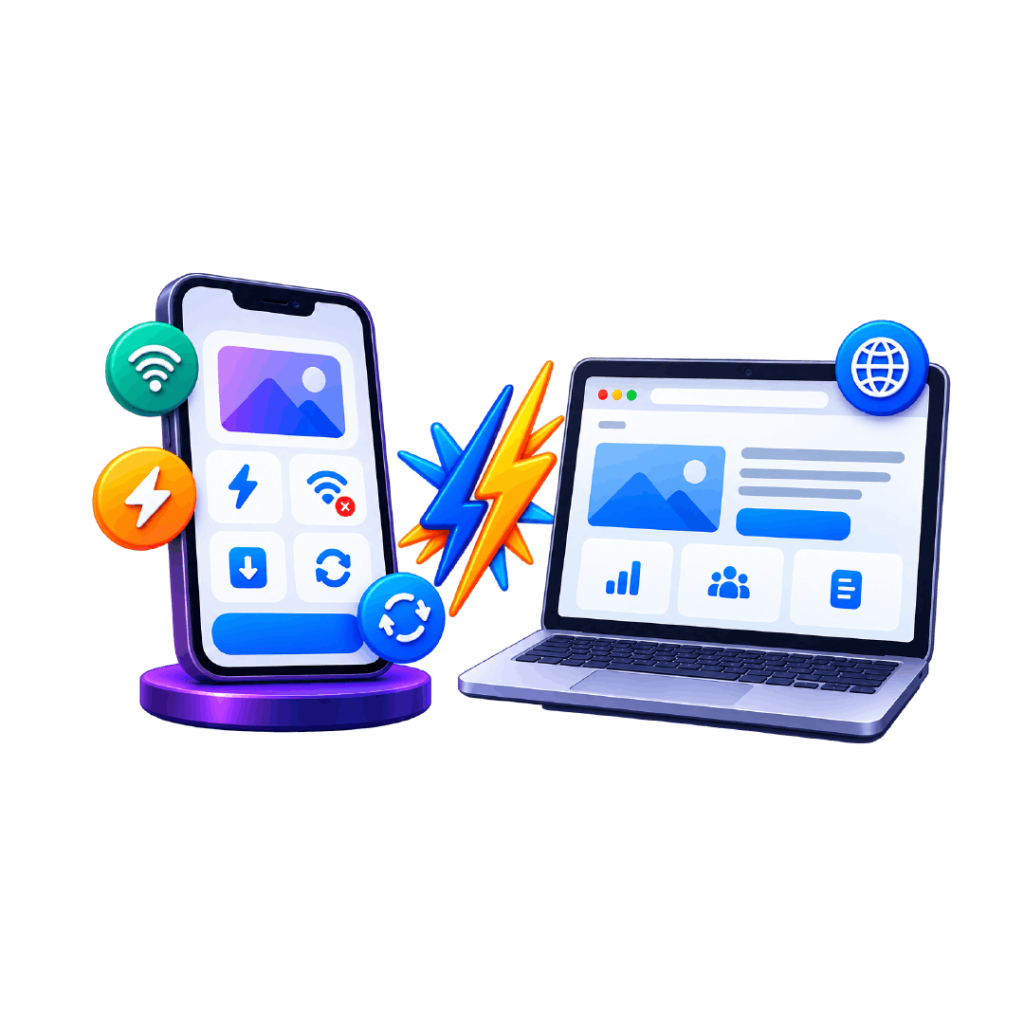
A Progressive Web App (PWA) provides an app-like experience through a web browser, while a traditional website focuses on delivering information, services, and online functionality. The right choice depends on your business goals, required features, user expectations, budget, and long-term growth plans.
Businesses today need more than just an online presence. They need digital experiences that are fast, accessible, easy to use, and capable of keeping users engaged. While websites have been the standard solution for years, Progressive Web Apps (PWAs) have introduced a new approach by combining the accessibility of websites with some features commonly associated with mobile applications.
Choosing between a PWA and a website depends on what your business needs to achieve. A content-focused business website may not require the same capabilities as an ecommerce platform, booking system, or customer-focused application.
In this guide, we will compare PWA vs Website, explain the differences between them, discuss their benefits and limitations, and help you understand which option may be suitable for your business.
PWA vs Website: Quick Comparison
Understanding the main differences between a PWA and a traditional website can help businesses choose the right approach.
Feature | Progressive Web App (PWA) | Traditional Website |
Access | Browser and installable experience | Browser-based access |
User Experience | App-like experience | Web experience |
Offline Support | Available through service workers | Usually limited or unavailable |
Push Notifications | Supported | Limited |
Performance | Optimized for faster interactions | Depends on website structure and optimization |
Device Features | Some device capabilities supported | Limited browser capabilities |
Updates | Instant updates without app store approval | Instant updates |
Development Approach | Web technologies with app-like features | Web technologies |
Neither option is automatically better for every business. The right choice depends on the type of experience you want to provide and the features your users need.
Key Differences Between PWA And Website
User Experience
One of the biggest differences between a PWA and a website is the user experience.
Traditional websites are mainly designed to provide information, allow users to browse content, complete forms, purchase products, or access services through a browser.
PWAs are designed to provide a more app-like experience. They can offer smoother interactions, faster navigation, and features that make users feel they are using an installed application.
For businesses where customer engagement and repeat usage are important, a PWA can provide a more interactive experience.
Performance And Loading Speed
Performance directly affects how users interact with a digital product. Slow-loading pages can increase abandonment rates and reduce user satisfaction.
PWAs use techniques such as caching and service workers to improve loading speed and allow certain content to load even with limited connectivity.
Traditional websites can also be optimized for speed through techniques such as image optimization, caching, and efficient development practices. However, PWAs are specifically designed to provide faster, app-like interactions.
For businesses that depend on frequent user interactions, faster performance can improve engagement and retention.
Installation And Accessibility
Traditional websites are accessed through a browser by entering a URL or searching online. Users do not need to install anything.
PWAs provide a middle ground between websites and mobile apps. Users can access them through a browser and, depending on device and browser support, add them to their home screen for easier access.
This allows businesses to provide an app-like presence without requiring users to download an application from an app store.
Offline Functionality
Offline capability is one of the major advantages of PWAs.
Through service workers, PWAs can store specific resources and allow users to access certain features even when internet connectivity is weak or unavailable.
For example:
- A news platform can allow users to read saved articles offline.
- An education platform can provide access to downloaded lessons.
- A business application can store important information for later synchronization.
Traditional websites generally depend on an active internet connection unless additional offline functionality is specifically developed.
Push Notifications
Push notifications help businesses communicate with users after they leave the platform.
PWAs can support notifications for:
- New offers
- Order updates
- Booking reminders
- Important announcements
- Personalized messages
Traditional websites usually have limited options for re-engaging users after they leave the browser.
For businesses that rely on customer retention, notifications can become an important engagement tool.
Device Features And Capabilities
Mobile devices provide features such as cameras, location services, sensors, and storage access.
Native mobile applications usually provide the deepest access to device capabilities. PWAs can access some device features through browser APIs, but availability depends on the operating system and browser support.
Since PWA functionality can vary across platforms, understanding platform-specific support is important. Learn more about PWA on iOS and PWA on Android to understand how PWAs work across different devices.
If your application requires advanced hardware integration, a native mobile application may be more suitable.
For businesses considering a complete mobile application solution, understanding different development approaches is important.
Benefits Of Progressive Web Apps For Businesses
Lower Development Complexity
One of the reasons businesses consider PWAs is that they can provide app-like experiences without requiring completely separate applications for different platforms.
A PWA can run across multiple devices while being developed using web technologies, which can simplify development and maintenance.
The choice of development framework also affects how efficiently a PWA can be built and maintained. Different technologies offer different capabilities depending on project requirements. Learn more about the best PWA frameworks for modern applications.
However, the actual effort depends on the complexity of features, integrations, and backend requirements.
Better User Engagement
Features such as push notifications, faster loading, and home screen access can encourage users to return more frequently.
For businesses such as ecommerce stores, booking platforms, and customer portals, improved engagement can help increase repeat usage.
Faster Updates
Unlike traditional mobile applications that may require app store approval before releasing updates, PWAs can generally be updated instantly through the web.
This allows businesses to fix issues, improve features, and release changes more quickly.
Works Across Multiple Devices
PWAs are designed to work across different devices and screen sizes.
A single PWA experience can support users on smartphones, tablets, and desktop browsers, making it useful for businesses that want broad accessibility.
How To Choose Between A PWA And Website?
The right choice depends on what your business needs from its digital platform.
Choose a traditional website when:
- Your main goal is sharing information
- You need online visibility and search presence
- Users do not require frequent interaction
- Advanced app-like features are unnecessary
Choose a PWA when:
- You need stronger user engagement
- Users frequently return to your platform
- Offline access is valuable
- Push notifications can improve customer retention
- You want an app-like experience without building separate mobile apps
Before making a decision, consider:
- Your target audience
- Required features
- Development budget
- Future scalability
- User expectations
A business should not choose a technology simply because it is newer. The right solution is the one that supports the product goals and provides value to users.
If you decide that a PWA is the right approach, understanding the development process can help you plan your project effectively. Learn more about how to build a Progressive Web App.
Conclusion
A PWA and a traditional website both serve valuable purposes, but the right choice depends on your business goals, user expectations, and required functionality.
Websites are suitable for businesses that need an accessible online presence, while Progressive Web Apps provide a more interactive experience with features such as offline access, notifications, and app-like functionality.
Before choosing between a PWA and a website, consider your users, features, budget, and long-term growth plans. The right technology approach can help create a faster, more reliable, and more engaging digital experience.
If you are planning a digital product, understanding your requirements first can help you choose the right development approach and build a solution that supports your business objectives.
Frequently Asked Questions
Is a PWA better than a website?
A PWA is not always better than a website. A website may be enough for businesses that need an online presence, while a PWA can be useful for businesses that need stronger engagement, faster interactions, and app-like features.
Does a PWA work offline?
Yes, PWAs can support offline functionality through service workers. The level of offline access depends on how the application is developed and what data needs to be available.
Should a small business build a PWA or website?
A small business should choose based on its goals. A website may be suitable for businesses focused on online visibility, while a PWA can be useful for businesses that need customer engagement features and frequent user interaction.