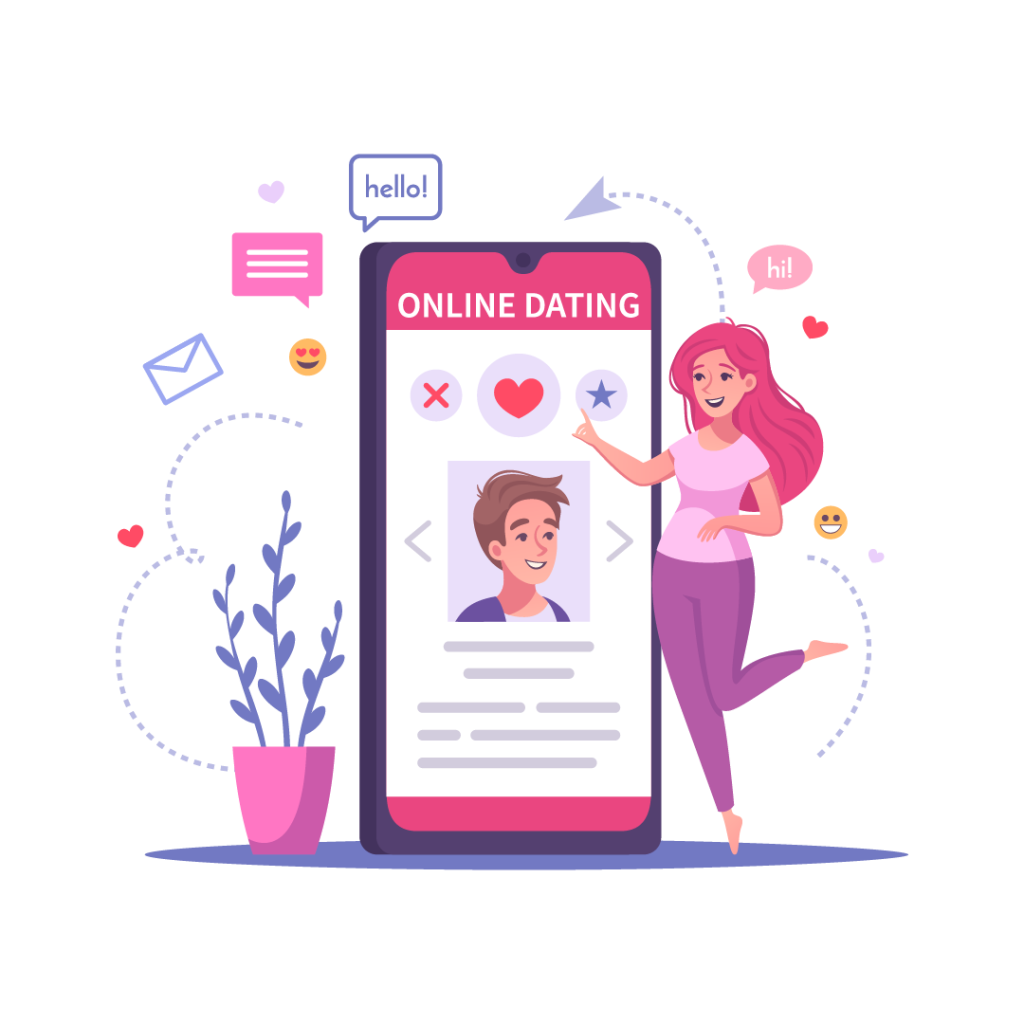
The strongest dating app ideas for 2026 focus on a specific niche, community, or dating format rather than competing directly against Tinder, Bumble, or Hinge on generic swiping. AI-powered deep compatibility matching, niche community platforms, activity-based dating, and anti-swipe intentional dating formats are where genuine startup opportunity currently exists in an otherwise saturated market.
Dating app usage has become mainstream enough that starting a general-purpose swiping app today means competing directly against platforms with millions of existing users and enormous marketing budgets. The real opportunity in 2026 sits somewhere else entirely, in specific, underserved audiences and formats the major platforms haven’t fully addressed.
The Next Step for Your Dating App Idea
The strongest dating app ideas solve a specific problem for a clearly defined audience. Start with a focused niche, validate demand, and build an MVP around what your target users actually need. With the right product strategy, a focused idea can grow into a scalable dating platform.
Most dating app idea lists repeat the same surface-level trends, AI matching, video profiles, gamification, without explaining that these are features, not standalone business ideas. Every major platform is already adding these same capabilities, which means a startup copying that feature list without a genuinely differentiated audience or format is really just building a smaller, later version of what already exists. This guide focuses instead on ideas with a real, defensible starting position.
Why the Dating App Market Still Has Room for New Ideas
AI adoption inside dating apps jumped 333 percent in a single year, with 54 percent of dating apps now using AI in some form, according to Match Group and the Kinsey Institute’s Singles in America research. This shift matters for new entrants specifically because it’s reshaping what users expect from a dating app entirely, deeper compatibility signals, AI-assisted profile creation, and smarter matching rather than the raw volume of profiles a platform can show.
This shift also changes the competitive calculus for a new entrant in a way worth understanding clearly. A few years ago, competing against an established dating app meant competing primarily on user base size, a battle a new platform simply couldn’t win. Now that matching quality and product experience matter as much as raw scale, a smaller, more focused app with genuinely better technology or a sharper audience fit has a real path to building something users prefer, even without millions of existing profiles to draw from.
What Makes a Dating App Idea Viable in 2026?
A viable dating app idea in 2026 picks one specific niche, community, or dating format and builds real density within it, rather than attempting to compete broadly against established platforms with an unfocused, general-purpose product. The winning apps in emerging categories consistently own one niche in one country or city first, launching as a focused MVP rather than a Tinder clone with every established feature copied and no real point of differentiation. Local critical mass matters more than most founders expect too, since a dating app with a thin, geographically scattered user base fails regardless of how strong its matching technology actually is.
This is worth internalizing before any product decisions get made, since it changes the entire order of operations for a dating app launch compared to most other app categories. A typical consumer app can often launch broadly and grow gradually as marketing spend brings in users one at a time. A dating app can’t follow that same playbook, since the core product, actually finding a match, simply doesn’t function well until a real, concentrated density of users exists in one place. This is exactly why the strongest launches start narrow and expand deliberately, rather than spreading thin from day one.
10 Dating App Ideas Worth Building in 2026
AI-Powered Deep Compatibility Matching Apps
Deep compatibility apps use AI to analyze behavioral signals, conversation patterns, and psychological compatibility rather than matching users purely on photos and stated interests. This approach directly targets a real, common complaint about mainstream swiping apps, that matches feel shallow and rarely translate into genuine connections, by surfacing compatibility signals a simple photo-and-bio profile can’t capture.
The technical bar for this category has genuinely dropped in a way worth noting, since the underlying AI and machine learning infrastructure that made deep compatibility matching prohibitively expensive a few years ago is now accessible to a well-resourced startup rather than only a company with a large dedicated data science team. This shift is a meaningful part of why this category has moved from a theoretical idea to a genuinely buildable product for a serious startup team in 2026.
Niche Community Dating Apps
Niche dating apps serve a specific religious, cultural, professional, or identity-based community, letting users connect within a shared context that already implies real compatibility on values or lifestyle before a single message is exchanged. Real examples already prove this model works at meaningful scale, JSwipe serves Jewish singles specifically, and HER serves LGBTQ+ women, both demonstrating that a focused community, not a mass-market audience, can support a genuinely successful dating platform.
What makes this category particularly strong for a startup is how naturally it solves the marketing and acquisition problem that sinks most new dating apps. A community-focused app can reach its target users through channels a general platform never could, community organizations, existing social groups, word of mouth within a tight-knit network, rather than relying entirely on expensive, broad-based paid acquisition to build an audience from nothing.
Activity-Based Dating Apps
Activity-based dating apps match users around shared real-world activities, hiking, fitness classes, specific hobbies, rather than starting with a profile and a swipe and hoping a conversation eventually leads somewhere. This format is currently one of the fastest-growing categories specifically among Gen Z daters, who consistently report wanting to actually do something with a match rather than sustain an indefinite text conversation that never turns into a real date.
Video-First Dating Apps
Video-first dating apps make short video introductions the primary profile format instead of static photos, giving users a genuine sense of someone’s personality and communication style before deciding to match or message. This directly addresses catfishing and misrepresentation concerns that remain a persistent, real trust problem across photo-only platforms, since video is meaningfully harder to fake convincingly than a curated photo set.
Anti-Swipe, Intentional Dating Apps
Anti-swipe apps deliberately limit daily matches, remove endless scrolling, or build in mechanisms that push users toward an actual offline date rather than prolonged in-app chatting. Thursday is a real, working example of this model, restricting the entire app experience to one day a week specifically to force users toward real dates instead of an indefinite, low-commitment texting loop that never converts into an actual meeting.
This category directly responds to a genuine, widely reported frustration with mainstream dating apps, endless swiping and messaging that rarely leads anywhere concrete. Framing a product’s core constraint, less access, fewer matches, limited time windows, as the actual value proposition rather than a limitation is a genuinely counterintuitive but increasingly validated positioning in this specific market, precisely because users are tired of infinite choice paired with almost no real outcomes.
Campus and Location-Density Dating Apps
Campus-focused dating apps concentrate on a single university or tightly bounded geographic area, solving the density problem that kills most new dating apps before they gain real traction. A college campus offers exactly the kind of concentrated, socially connected population a new dating app needs to reach critical mass quickly, since a small, focused launch geography beats a diluted global release that leaves users match-starved everywhere.
The same density logic extends well beyond campuses too, a specific professional industry, a co-working community, a tight-knit neighborhood, any sufficiently concentrated and socially connected group offers the same fundamental advantage. The core principle worth carrying forward regardless of which specific density pocket a founder chooses is that a real, tightly bounded community will always outperform a diffuse, wide launch in the early, most fragile stage of a dating app’s life.
AI Dating Coach and Wingman Apps
AI coaching apps help users write stronger profiles, select better photos, and draft opening messages, functioning as a layer on top of existing dating platforms rather than a replacement for them entirely. This category monetizes differently than a traditional dating app too, since users pay for coaching and optimization tools directly rather than for access to matches themselves, a genuinely different, less saturated business model within the same broader space.
Safety-First, Verification-Focused Dating Apps
Safety-focused dating apps lead with identity verification, gender-aware design, and moderation as the core differentiator rather than an add-on feature, directly addressing the safety concerns, particularly for women and LGBTQ+ users, that remain one of the most consistently cited reasons people hesitate to use dating apps at all. Bumble’s women-first messaging model demonstrates this approach can become a genuine, defensible market position rather than just a marketing angle.
This is worth taking seriously as a core product decision rather than a compliance checkbox, since safety features built in from the start shape a product’s culture and user base in ways that are genuinely difficult to retrofit later. A platform known from day one for taking user safety seriously attracts a self-selecting user base that reinforces that same culture, while a platform that adds safety features reactively after user complaints tends to carry a harder reputation to shake even after the underlying product genuinely improves.
AR and VR Virtual Date Apps
AR and VR dating apps let users go on a virtual date, a shared activity or environment, before committing to meeting in person, adding a genuinely new middle step between matching and a real-world first date. This remains an earlier-stage category, but it directly addresses the real anxiety many daters feel about a first in-person meeting with a near-stranger, giving both parties a lower-stakes way to build comfort first.
Mental Wellness and Compatibility Integrated Apps
Wellness-integrated dating apps combine compatibility matching with genuine mental health and emotional wellness tools, treating a user’s overall wellbeing as connected to their dating experience rather than entirely separate from it. This reflects a broader 2026 shift toward more holistic products generally, and it directly differentiates from apps that treat dating purely as a numbers and volume problem to be solved through more matches and more swiping.
Niche Dating App vs Mass-Market Dating App
Factor | Niche Dating App | Mass-Market Dating App |
Competitive landscape | Less saturated, room for a focused leader | Extremely saturated, dominated by established players |
User acquisition cost | Lower, community-driven growth possible | Very high, requires major marketing spend |
Time to critical mass | Faster within a focused community | Slower, requires massive scale to feel populated |
Monetization | Often stronger loyalty, community trust | Relies on scale and network effects |
Startup fit | Strong fit for a focused, resource-constrained team | Requires substantial funding to compete credibly |
How to Choose the Right Dating App Idea for Your Startup
Pick a specific audience or format you understand deeply, ideally one you have genuine insight into as a member of that community or through direct research, rather than guessing at what a broad, generic audience might want. Validate real density in your target launch geography or community before building a full product, since a dating app with strong technology but a thin user base in any one place will still fail regardless of how good the matching algorithm actually is. Decide early whether your differentiation is the matching technology itself, AI-powered compatibility, or the format and community, activity-based, niche, intentional, since trying to lead with too many differentiators at once tends to dilute the one that would have actually mattered most to your target users.
Talking directly to potential users before writing a single line of code remains one of the most underused steps in dating app development specifically, given how much the category depends on genuinely understanding what a specific audience actually wants from connection, not just what features sound appealing in the abstract. A founder who has real, lived context on their target niche, or who invests real time understanding it through direct conversations, consistently builds a sharper, more defensible product than one working purely from market research reports and competitor feature lists.
For founders exploring dating app development in the USA, the strongest early-stage advantage usually comes from picking a genuinely underserved niche and building real density there first, rather than attempting to out-feature Tinder or Hinge on their own established turf.
Common Mistakes When Building a Dating App
- Launching as a broad, unfocused Tinder clone. Competing directly against platforms with millions of existing users and no meaningful differentiation is a losing position from day one.
- Launching across too wide a geography at once. A thin, scattered user base kills a dating app faster than almost any other product category, since a match-starved experience drives users away permanently within their first session.
- Treating AI as a marketing feature rather than a genuine product improvement. Users can tell the difference between AI bolted on for a press release and AI that actually improves match quality or reduces friction.
- Underinvesting in safety and verification from the start. Retrofitting trust and safety features after user complaints already exist is far harder than building them into the product from day one.
- Ignoring monetization strategy until after launch. Dating apps increasingly monetize through coaching tools, profile boosts, and premium features beyond a basic subscription, and this needs to be part of the original product plan, not an afterthought.