
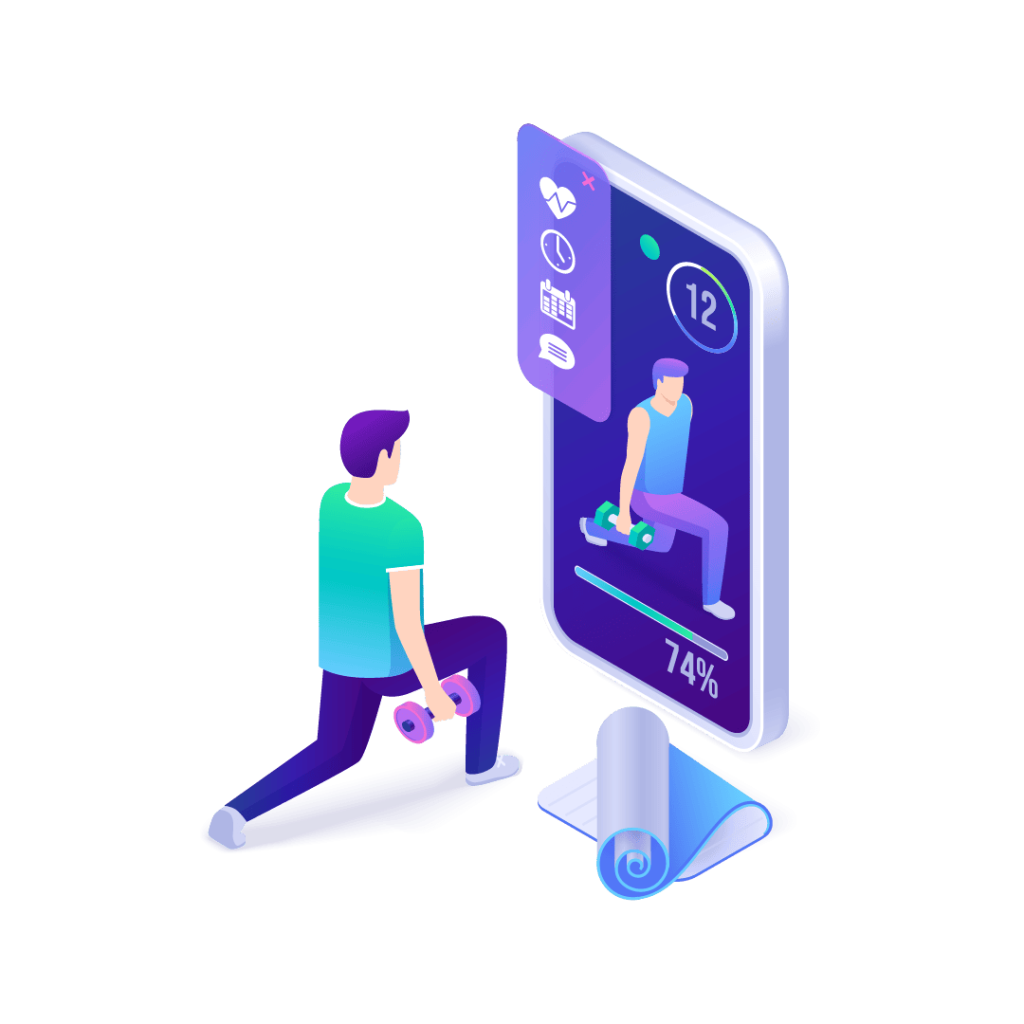
The strongest fitness app ideas for 2026 combine AI-powered personalization with wearable data, since users now expect adaptive workout and nutrition plans that respond to their actual biometric data, not generic programs. Beyond consumer fitness apps, real opportunity also exists in business-facing tools, corporate wellness platforms and gym management software, that solve genuinely different problems than a typical workout tracker.
The fitness app market isn’t just growing, it’s shifting in what users actually expect from a fitness app. A basic workout tracker with a calendar and a rep counter no longer differentiates from what’s already available for free. The ideas in this guide reflect where real demand and real differentiation currently sit, not a generic list of features every fitness app already has.
Most fitness app idea lists online repeat the same handful of concepts, workout tracker, meal logger, step counter, without acknowledging that these categories have been thoroughly built out by free, well-funded platforms already. This guide focuses instead on where genuine white space still exists, whether that’s a deeper AI capability most apps haven’t implemented yet, or an entire business-facing category that consumer-focused fitness apps overlook by default.
Why the Fitness App Market Is a Strong Opportunity Right Now
The global fitness app market is projected to grow from an estimated $17.71 billion in 2025 to $22.36 billion in 2026, a growth rate of roughly 26 percent driven by AI personalization, wearable integration, and rising preventive healthcare focus. Consumer behavior backs this up directly, with over 60 percent of fitness app users now relying on AI to monitor workouts and nearly half using AI for nutrition guidance specifically, a meaningful shift from fitness apps as simple activity loggers toward genuinely intelligent coaching tools.
What’s driving this growth matters as much as the growth rate itself. Wearable device penetration has expanded well beyond early adopters, smartwatches, fitness bands, and smart rings are increasingly mainstream rather than niche purchases, and each device generates data a fitness app can meaningfully act on. At the same time, healthcare is shifting toward prevention rather than treatment, and fitness apps that connect to that broader wellness picture, not just workout logging in isolation, sit squarely in the direction both consumer expectations and the underlying market are actually moving.
What Makes a Fitness App Idea Actually Viable?
A viable fitness app idea solves a specific problem for a specific user segment better than the free, generic fitness apps already on the market, rather than trying to be a broad, all-purpose fitness tracker. The fitness app category is genuinely crowded at the generic level, calorie counters, basic workout trackers, step counters, which is exactly why the ideas worth pursuing in 2026 lean into deeper personalization, a specific underserved audience, or a business-facing use case most consumer fitness apps ignore entirely.
This principle applies whether you’re a startup founder validating a first product or an existing fitness business exploring digital expansion. A gym owner considering a companion app for existing members is solving a fundamentally different problem than a startup building a standalone consumer product from scratch, and the right idea depends on which starting point actually describes your situation, not a generic template applied regardless of context.
10 Fitness App Ideas Worth Building in 2026
AI-Powered Personalized Workout Apps
AI-powered workout apps generate and continuously adjust training plans based on a user’s goals, body type, performance data, and progress, rather than offering a fixed program everyone follows identically. Apps like FitnessAI demonstrate this well, using AI specifically to optimize sets, reps, and weight recommendations that adapt as a user’s strength actually changes, not on a rigid predetermined schedule.
Wearable-Integrated Fitness Tracking Apps
Wearable-integrated fitness apps pull data directly from smartwatches, fitness bands, and smart rings, consolidating heart rate, sleep quality, and activity data into one dashboard rather than leaving a user to check several separate device apps. This has moved from a nice-to-have feature to a genuine baseline expectation, since users with multiple fitness devices expect their primary app to unify that data automatically.
Gamified Fitness and Community Apps
Gamified fitness apps turn workouts into challenges, streaks, badges, and leaderboards, the same mechanics that have made platforms like Strava and Zwift genuinely sticky rather than just functional. This category works specifically because motivation, not information, is usually the actual barrier to consistency, and gamification directly targets that motivation gap rather than adding more data a user already has access to.
AI Nutrition and Meal Planning Apps
AI nutrition apps analyze a user’s goals, preferences, and in more advanced cases biometric data like continuous glucose monitoring, to generate personalized meal plans and flag foods likely to cause energy spikes or work against a specific goal. Precision nutrition, tailoring recommendations to an individual’s actual biology rather than generic dietary guidelines, is one of the more genuinely differentiated directions in this space right now. Hands-free food logging, scanning a meal through a phone camera rather than manually searching and entering each item, has also become a meaningful differentiator, since manual logging fatigue is one of the most common reasons users abandon nutrition tracking apps within the first few weeks.
Holistic Wellness Apps
Holistic wellness apps combine fitness, nutrition, sleep, and mental health tracking into one connected experience rather than treating each as a separate, siloed category. Leading apps in this space increasingly offer a single dashboard tracking everything from mood to glucose levels, reflecting a broader shift toward treating health as one connected system rather than several unrelated data points. This category rewards genuine cross-domain expertise during development, since a fitness app team bolting on a basic mood tracker as an afterthought produces a noticeably weaker product than one built with real intention around how these different health dimensions actually interact with each other.
Recovery and Readiness Tracking Apps
Recovery-focused apps track heart rate variability, sleep quality, and physiological stress to generate a daily readiness score, telling a user whether their body is prepared for intense training or needs rest. This category has grown specifically because overtraining without adequate recovery data is a real, common problem serious fitness users actively want help avoiding, not a marginal feature added for novelty. Apps built specifically around readiness scoring have found genuine traction with a more advanced, performance-focused audience willing to pay a premium for data most general fitness apps don’t surface at all.
AR and VR Immersive Fitness Apps
AR and VR fitness apps transform a workout into an interactive environment, a virtual yoga studio, an obstacle course, gamified training scenarios that make exercise feel like an experience rather than a routine task to complete. This remains a smaller but genuinely differentiated category, particularly appealing to users who find traditional workout formats repetitive and are motivated by novelty and immersion. The hardware requirement is a real consideration here too, since a VR-based experience specifically depends on headset adoption continuing to grow, while AR features accessible through a standard phone camera reach a meaningfully broader audience without requiring any additional hardware purchase.
Virtual AI Coaching With Real-Time Form Analysis
AI coaching apps use computer vision through a phone camera to analyze a user’s exercise form in real time, flagging technique issues the way an in-person trainer would, without requiring an actual trainer present. This directly addresses one of the biggest gaps in home fitness specifically, the lack of real-time feedback that prevents bad form from becoming a habit or, worse, an injury.
Corporate Wellness Apps for Businesses
Corporate wellness apps let employers sponsor fitness programs for their workforce, tracking participation, offering incentives, and often integrating with existing health insurance or benefits platforms. This is a genuinely underserved business-facing opportunity, since most fitness apps target individual consumers directly, leaving real demand from HR and benefits teams looking for a turnkey solution to offer employees.
The sales motion here differs meaningfully from a typical consumer fitness app too, worth understanding before committing to this direction. Rather than acquiring individual users one at a time through marketing spend, a corporate wellness platform sells to a single decision maker, an HR or benefits leader, who then rolls the app out to an entire workforce at once. This means slower, more relationship-driven sales cycles, but each successful deal delivers a meaningfully larger and more predictable user base than the equivalent effort spent on individual consumer acquisition.
Gym and Studio Management Apps for Fitness Professionals
Management apps built for gyms, studios, and independent trainers handle scheduling, client communication, billing, and business operations, a fundamentally different product than a consumer workout tracker. Platforms in this category increasingly add AI-powered features too, smart scheduling, churn prediction, automated client communication, giving fitness businesses the same intelligence layer consumer apps offer their end users.
This category deserves more attention from founders than it typically receives, since it solves problems that have nothing to do with helping someone complete a workout, filling empty class slots, predicting which members are at risk of canceling, automating the administrative work that otherwise eats into a trainer’s actual coaching time. A founder with operational or business software experience, not necessarily a fitness background specifically, is often better positioned to build a genuinely strong product in this category than in the more crowded consumer-facing space.
Consumer-Facing vs Business-Facing Fitness Apps
Factor | Consumer-Facing Apps | Business-Facing Apps |
Primary user | Individual fitness enthusiast | Gym owner, trainer, HR/benefits team |
Core value | Personal workout, nutrition, or recovery tracking | Managing clients, scheduling, or employee wellness programs |
Monetization | Subscription, freemium, in-app purchases | B2B licensing, per-seat pricing, enterprise contracts |
Competitive landscape | Highly saturated, crowded market | Less saturated, real underserved demand |
Example categories | AI coaching, wearable tracking, gamified workouts | Corporate wellness platforms, gym management software |
Many real fitness businesses end up combining both models, a consumer-facing app paired with a business dashboard for gyms or trainers managing their own client base within the same platform, rather than treating the two as mutually exclusive directions.
How to Choose the Right Fitness App Idea for Your Business
Start by identifying a specific, underserved audience rather than trying to serve every possible fitness app user at once, since the most successful fitness apps in this list all solve a focused problem well instead of being a generic tracker with every feature bolted on. Consider whether your idea competes directly against free, well-established apps, MyFitnessPal, Strava, Apple Fitness, since competing head-on with those on basic tracking features alone is a much harder path than building something genuinely differentiated around AI personalization, a specific niche audience, or a business-facing use case those platforms don’t address. Weigh consumer versus business-facing models honestly too, since business-facing fitness software currently faces meaningfully less competitive saturation than the consumer fitness app space, even though it requires a different sales motion and longer relationship-building cycle to close a customer.
A useful test worth applying to any fitness app idea before committing real development budget to it: could a user accomplish roughly the same outcome using a free, already-installed app on their phone today. If the honest answer is yes, the idea needs a sharper point of differentiation before it’s ready to build, since a marginally different version of an already-free tool rarely wins users away from what they’ve already adopted and trust.
Common Mistakes When Building a Fitness App
- Building a generic tracker without real differentiation. Basic step counting and calorie logging are already free and well-served by major platforms, offering little reason for a user to switch.
- Adding every trending feature at once. AI personalization, AR workouts, and social gamification are all genuinely valid directions, but combining several as an MVP spreads limited resources across too many unproven features simultaneously.
- Ignoring data privacy planning from the start. Fitness apps collect genuinely sensitive health data, and privacy and security need to be built into the architecture early, not retrofitted after a user base already exists.
- Underestimating wearable integration complexity. Supporting multiple device ecosystems, Apple Health, Google Fit, various smartwatch APIs, adds real engineering scope beyond what a simple feature list implies.
- Overlooking the business-facing opportunity entirely. Most new fitness app ideas default to consumer apps, leaving corporate wellness and gym management software as a comparatively underserved space worth genuine consideration.
Choosing the Right Fitness App Idea for Your Business
Choosing between these directions, and scoping the right feature set for the specific audience you’re targeting, is the kind of early decision worth getting right before development begins. For businesses specifically exploring fitness app development in the USA, matching the idea to a real, validated gap in the market matters more than chasing every trend covered in this guide at once.
The strongest starting point is rarely the idea with the most features attached to it. It’s the one that solves a genuine problem for a specific audience clearly enough that the value is obvious within the first minute of using it, whether that audience is an individual training for a race, a gym owner tired of manually managing schedules, or an HR team trying to offer employees something better than a generic wellness stipend.