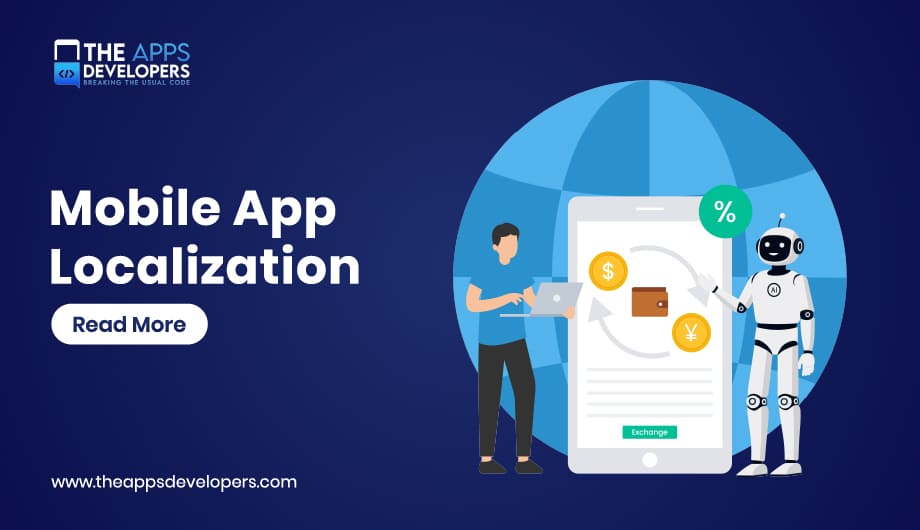
Mobile app localization means adapting an app’s language, design, and functionality so it feels native in a specific market rather than swapping English text for another language. Translation changes the words. Localization changes the whole experience: currency formats, layout direction, which colors and images actually land with local users.
A lot of teams still treat global expansion as a translation project. Hand the strings to a vendor, flip a language switch, call it done. Then the German buttons overflow, the Arabic screens read backward, and support tickets start piling up from users who can tell the app wasn’t really built with them in mind. Below is what real localization actually involves, the technical groundwork that has to happen before translation even starts, and the process that gets an app ready for a new market instead of just multilingual.
What Is Mobile App Localization?
Mobile app localization is the process of adapting an app’s content, design, and functionality to match the language, culture, and technical expectations of a specific target market. It covers far more than the visible text. Date and currency formats, layout direction, imagery, tone, even push notification copy, all fall under the same umbrella.
Localization vs. Internationalization vs. Translation
These three terms get used interchangeably a lot, and mixing them up is where a lot of localization projects go sideways early.
Term | What It Actually Covers | When It Happens |
Internationalization (i18n) | Engineering the app so it can support multiple languages and regions without code changes each time | During initial development, ideally before a single language gets added |
Localization (l10n) | Adapting content, design, currency, imagery, and cultural references for a specific market | After internationalization is in place, market by market |
Translation | Converting text from one language to another | The narrowest piece of the three, and only one part of a full localization effort |
Internationalization has to come first. Try to localize a codebase that hardcodes strings, dates, and layouts, and you’ll pay for it later, at a much higher cost than building it from day one would have run.
Why Localization Is Worth the Investment
Apps that localize properly tend to see a real jump in downloads and engagement once new languages roll out. Makes sense when you think about it. A user who opens an app and finds it built for their language, currency, and cultural context trusts it faster than one that reads like a translation stapled on after the fact. That trust turns into retention and conversion, not just a bigger addressable market on a slide.
How to Prepare Your App for Localization
Externalize Every String
User-facing text belongs in resource files, kept separate from the codebase, never hardcoded into components or controller logic. It’s the single most important internationalization step, because it lets translators and localization tools touch the content without ever touching application code. Full Unicode (UTF-8) encoding throughout is what makes this hold up across every language and character set you’ll eventually need.
Never Hardcode Dates, Currency, or Number Formats
Dates, currencies, and number formatting vary by region, and hardcoding them to one locale’s conventions works fine until the app reaches a second market. Pull these values from locale-aware libraries at runtime. Static values baked into the build won’t survive contact with a new country.
Design for Text Expansion and RTL Layouts
German and French routinely run 20 to 30 percent longer than the English equivalent, and a button sized for English will clip or overflow once translated. Arabic and Hebrew read right to left, and that affects a lot more than text direction. Icons, progress bars, and animations sometimes need to mirror too, or the layout feels wrong even to someone who can’t say exactly why. Apple’s localization guidelines and Android’s localization documentation both cover the mirroring and layout-direction APIs for handling this properly, and it needs to be planned for early. Patching it in after translated strings start breaking the interface is a much rougher process, and it ties back to the same flexible-layout thinking behind our mobile app UI/UX design best practices guide.
The Localization Process: A Step-by-Step Approach
- Pick markets based on real signals, not guesses. Look at where existing users already download the app organically, and study competitor apps in candidate markets to see what users there complain about and expect.
- Build a glossary and style guide before translating anything. Lock in approved translations for brand terms, feature names, and tone up front, or every future translation drifts a little further from the last.
- Use AI translation as a first draft, not the final answer. Machine translation produces a solid starting point fast these days, but brand voice, humor, and cultural nuance still need a human reviewer fluent in the target market, someone who lives there, not just someone who speaks the language.
- Adapt visuals and cultural references too. A hand gesture, color, or image that reads as neutral in one market can mean something completely different in another. Culturally neutral defaults, with room to swap in market-specific assets later, save a lot of rework.
- Localize app store metadata on its own track. Titles, subtitles, and screenshots need their own translation pass with local keyword research behind them, rather than a literal translation of the English listing. A well-localized listing affects discoverability in each market’s store search, which is the same territory covered in our App Store Optimization guide.
- Test on real devices in each target market. Simulators catch plenty, but RTL rendering, font rendering, and truncated text tend to show up more reliably on real hardware. Worth treating as its own dedicated QA pass rather than folding it into general mobile app testing as an afterthought.
- Treat localization as ongoing, not a launch event. New features need translation before they ship, not after, and older translations need periodic review as language and expectations shift.
Common Localization Mistakes That Undermine Global Launches
Handing off localization as a translation task after the app is already built is probably the biggest one. Retrofitting internationalization into a finished codebase is a real engineering project, not a quick patch. Embedding text inside images instead of externalized strings is another headache waiting to happen, since it turns every future translation into a design job instead of a text swap. Skipping cultural review of visuals, or leaning on machine translation alone for anything brand-sensitive, tends to produce an app that technically runs in a new language without ever quite feeling like it belongs there.
How Localization Connects to the Rest of Your App
Localization isn’t a feature you bolt on right before a market launch. The internationalization groundwork needs to be part of Mobile App Development from the earliest planning stages, tied closely to how the mobile app development process gets scoped from day one. Retrofit it into a mature app instead, and you’re usually reworking string handling, layout logic, and formatting across the entire codebase. That costs a lot more than building it in from the start.
How The Apps Developers Approaches Mobile App Localization
We build internationalization into the architecture early, not as a scramble once a business decides to expand. Externalized strings, locale-aware formatting, flexible layouts, all from day one, so adding a new market later becomes a content and QA effort instead of a rebuild. If you’re planning to expand into new markets, or an existing app’s localization feels more like a rough translation than a real fit, we’re glad to help figure out what needs to change.
Conclusion
Mobile app localization done well is an engineering decision as much as a translation one. Get the internationalization groundwork right early, treat translation as the narrowest slice of a much bigger cultural and technical adaptation, and test in each market with the same rigor as the rest of the app. Skip any of that, and a global launch ends up multilingual without ever actually feeling local.
If you’re planning to expand into new markets, get in touch. We can help you figure out what your app actually needs before it reaches its next audience.
Frequently Asked Question
What's the difference between localization and translation?
Translation converts text from one language to another. Localization covers more ground: currency formats, layout direction, imagery, cultural references, tone, so the app feels built for that market rather than just readable in its language.
Should internationalization happen before or after building the app?
Before, ideally from the very start. Internationalization is an engineering foundation: externalized strings, locale-aware formatting, flexible layouts. Retrofitting it into a finished app costs significantly more than building it in from day one.
Can AI translation handle mobile app localization on its own?
It handles a strong first draft well, especially for repetitive or straightforward strings. Brand voice, humor, and cultural nuance still benefit from a human reviewer who actually lives in the target market, not just someone who speaks the language.
Do app store listings need separate localization from the app itself?
Yes. Titles, subtitles, and screenshots need their own translation and keyword research for each market's store search, rather than a literal translation of the original listing, since discoverability depends on locally relevant terms.
Which languages should a business localize first?
Whichever markets show the strongest existing signal: organic downloads, inbound requests, a clear competitive gap. Total population alone is a weak proxy. Commercial fit and ongoing maintenance cost matter just as much as market size.